
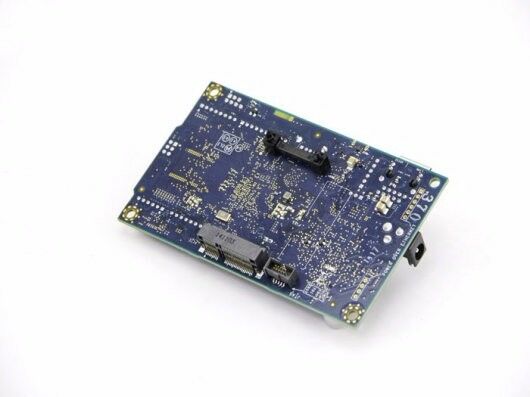
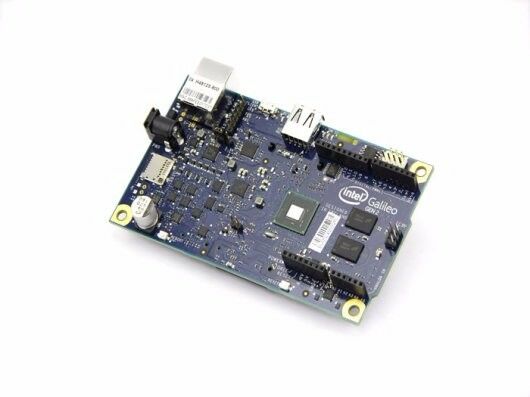
Description
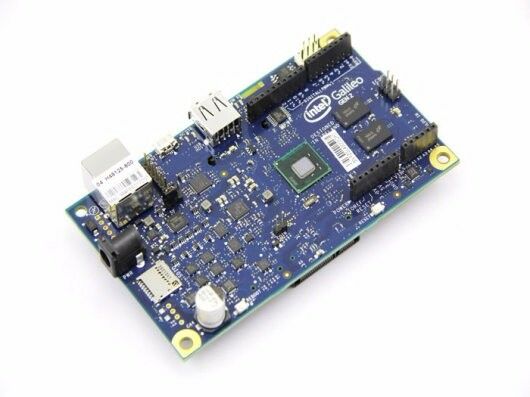
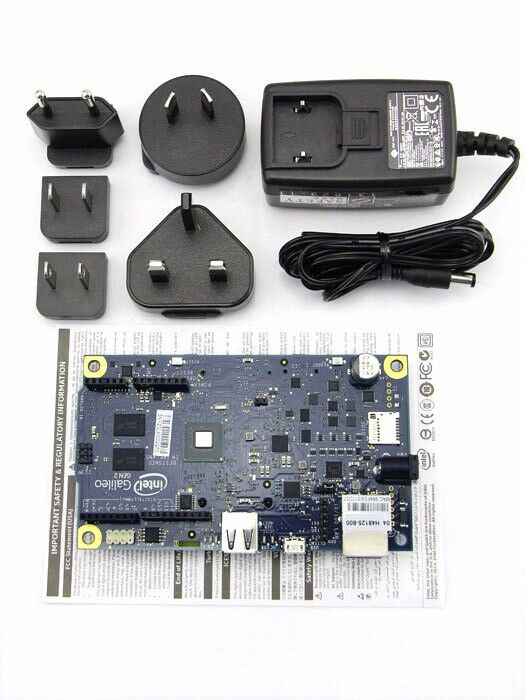
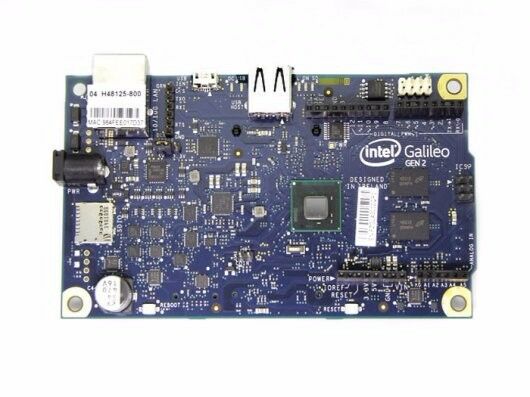
Intel Galileo Gen 2 development board, the first in a family of Arduino-certified development boards based on Intel architecture and specifically designed for makers, students, educators and DIY electronics enthusiasts.
Based on the Intel Quark SoC X1000, a 32-bit Intel Pentium processor-class system on a chip (SoC), the genuine Intel processor and native I/O capabilities of the Intel Galileo board deliver great performance, and a broad spectrum of hardware peripheral and software support. The board also provides a simpler and more cost-effective development environment compared to the Intel Atom Processor- and Intel Core processor-based designs.
What’s new with Intel Galileo Gen 2
-
• 6-pin 3.3V USB TTL UART header replace 3.5mm jack RS-232 console port for Linux debug. New 6-pin connector mates with standard FTDI USB serial cable (TTL-232R-3V3) and popular USB-to-Serial breakout boards.
-
• 12 GPIOs now fully native for greater speed and improved drive strength.
-
• 12-bit pulse-width modulation (PWM) for more precise control of servos and smoother response.
-
• Console UART1 can be redirected to Arduino headers in sketches, eliminating the need for soft-serial in many cases
-
• 12V Power-over-Ethernet (PoE) capable (PoE module installation required).
-
• Power regulation system changed to accept power suppliers from 7V to 15V.
FEATURES
-
• Intel Quark SoC X1000 application processor, a 32-bit, single core, single-thread, Pentium instruction set architecture (ISA)-compatible CPU, operating at speeds up to 400MHz.
-
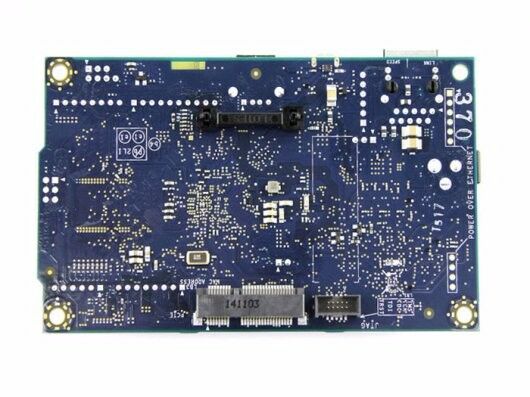
• Support for a wide range of industry standard I/O interfaces, including a full-sized mini-PCI Express slot, 100Mb Ethernet port, Micro-SD slot, USB host port, and USB client port.
-
• 256 MByte DDR3, 512 Kbyte embedded SRAM, 8 MByte NOR Flash, and 8 Kbit EEPROM standard on the board, plus support for MicroSD card up to 32GB.
-
• Hardware-/pin-compatibility with a wide range of Arduino Uno R3 shields.
-
• Programmable through the Arduino integrated development environment (IDE) that is supported on • Microsoft Windows, Max OS, and Linux host operating systems
-
• Support for Yocto 1.4 Poky Linux release.
SPECIFICATION
| PROCESSOR FEATURES | |
| Model | Intel Quark SoC X1000 |
| Speed | 400 MHz |
| Cores | 1/1 |
| ISA | 32-bit Intel Pentium processor-compatible ISA |
| L1 CACHE | 16 KB |
| SRAM | 512 KB on-die, embedded; 800 MT/s |
| Technologies Supported | Integrated real-time clock, Optional 3 V coin cell battery for operation between turn-on cycles |
| STORAGE | |
| Firmware | 8 MB NOR Flash |
| DRAM | 256 MB DDR3 |
| SD Card (Optional) | Up to 32 GB |
| USB | Compatible with any USB 2.0 storage device |
| Eeprom | 8 KB |
| SPECIFICATIONS | |
| Dimensions | 123.8mm (L) x 72.0mm (W) |
| Connectors | 6-pin console UART, 6-pin ICSP, 10-pin JTAG FOR DEBUGGING, RJ45 Ethernet, Power over Ethernet capable, USB 2.0 Host (standard Type A), USB 2.0 Client (micro-USB Type B), Mini-PCI Express 1x slot, Jack with increased range (7 to 15 V) |
| Power | Supports Power-over-Ethernet (requires PoE module installation), Header for RTC power |
| Buttons | Reset for sketch and attached shield resets 10/100 Mbps Ethernet, Reboot to reset the Intel Quark SoC X1000 |
PPRODUCT RESOURCE
Reviews
There are no reviews yet.