
Description

Attention
This product has shipping restriction to certain countries. It can only be sent to countries and regions listed as below: United States, Japan, Korea, Hong Kong, Taiwan, Australia, New Zealand, India, Ghana, Singapore , Oman, Philippines, Thailand, Austria, Belgium, Bulgaria, Croatia, Cyprus, Denmark, Estonia, Fiji, Germany, Greece, Hungary, Ireland, Italy, Latvia, Lithuania, Luxembourg, Malta, Netherlands, Poland, Portugal, Romania, Slovakia, Slovenia, Spain, Sweden, United Kingdom, Switzerland, Iceland, Liechtenstein, Norway, Turkey

Note
We have released the Coral Dev Board TELEC Version which can be sent to Japan and Korea.
Features
- Performs high-speed ML inferencing: The onboard Edge TPU coprocessor is capable of performing 4 trillion operations (tera-operations) per second (TOPS), using 0.5 watts for each TOPS (2 TOPS per watt). For example, it can execute state-of-the-art mobile vision models such as MobileNet v2 at almost 400 FPS, in a power-efficient manner. See more performance benchmarks.
- Provides a complete system: A single-board computer with SoC + ML + wireless connectivity, all on the board running a derivative of Debian Linux we call Mendel, so you can run your favorite Linux tools with this board.
- Supports TensorFlow Lite: No need to build models from the ground up. TensorFlow Lite models can be compiled to run on the Edge TPU.
- Supports AutoML Vision Edge: Easily build and deploy fast, high-accuracy custom image classification models to your device with AutoML Vision Edge.
- Scale from prototype to production: Considers your manufacturing needs. The SoM can be removed from the baseboard, and integrated into your hardware. You can purchase the SoM separately here.
Description
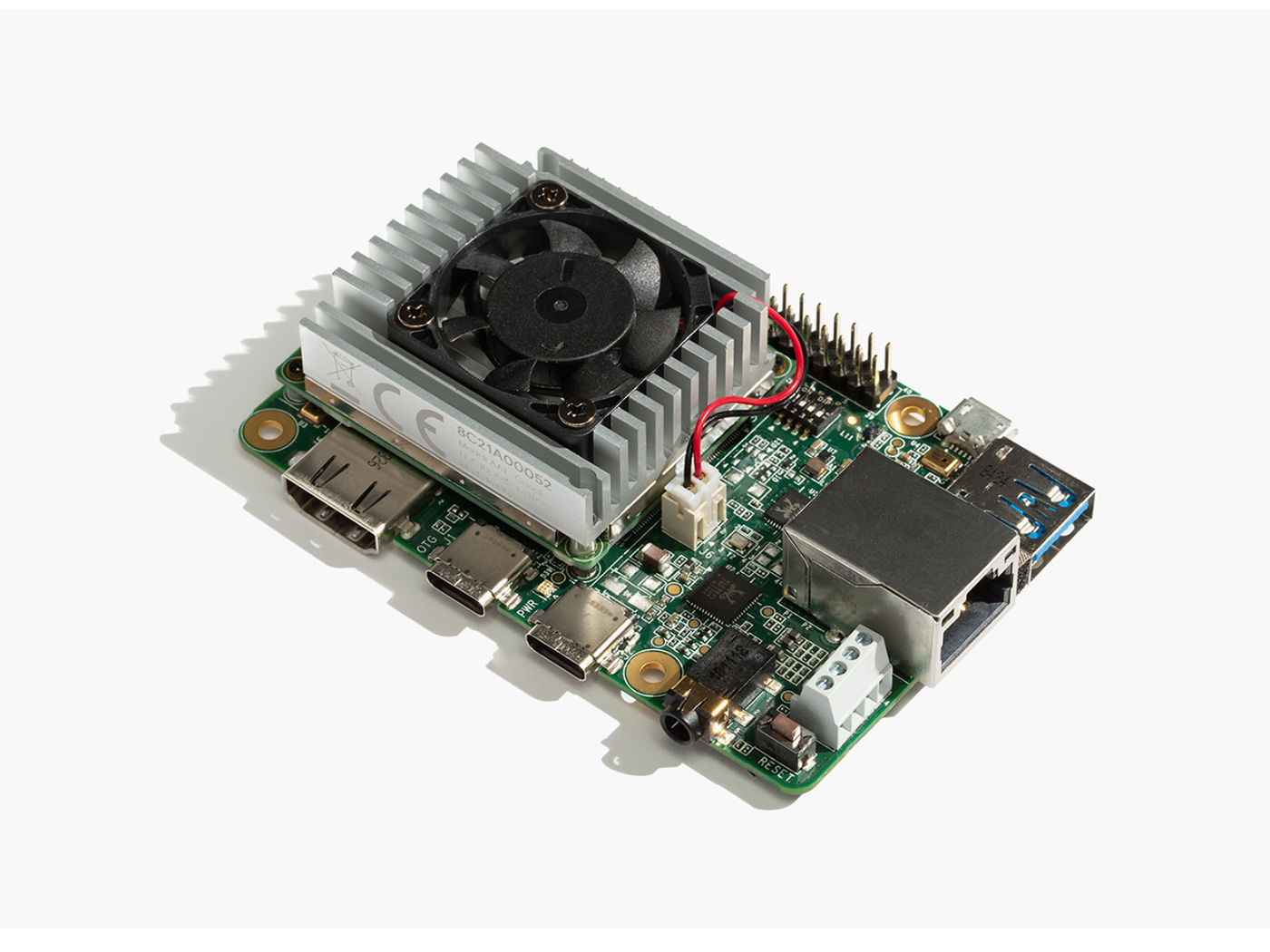
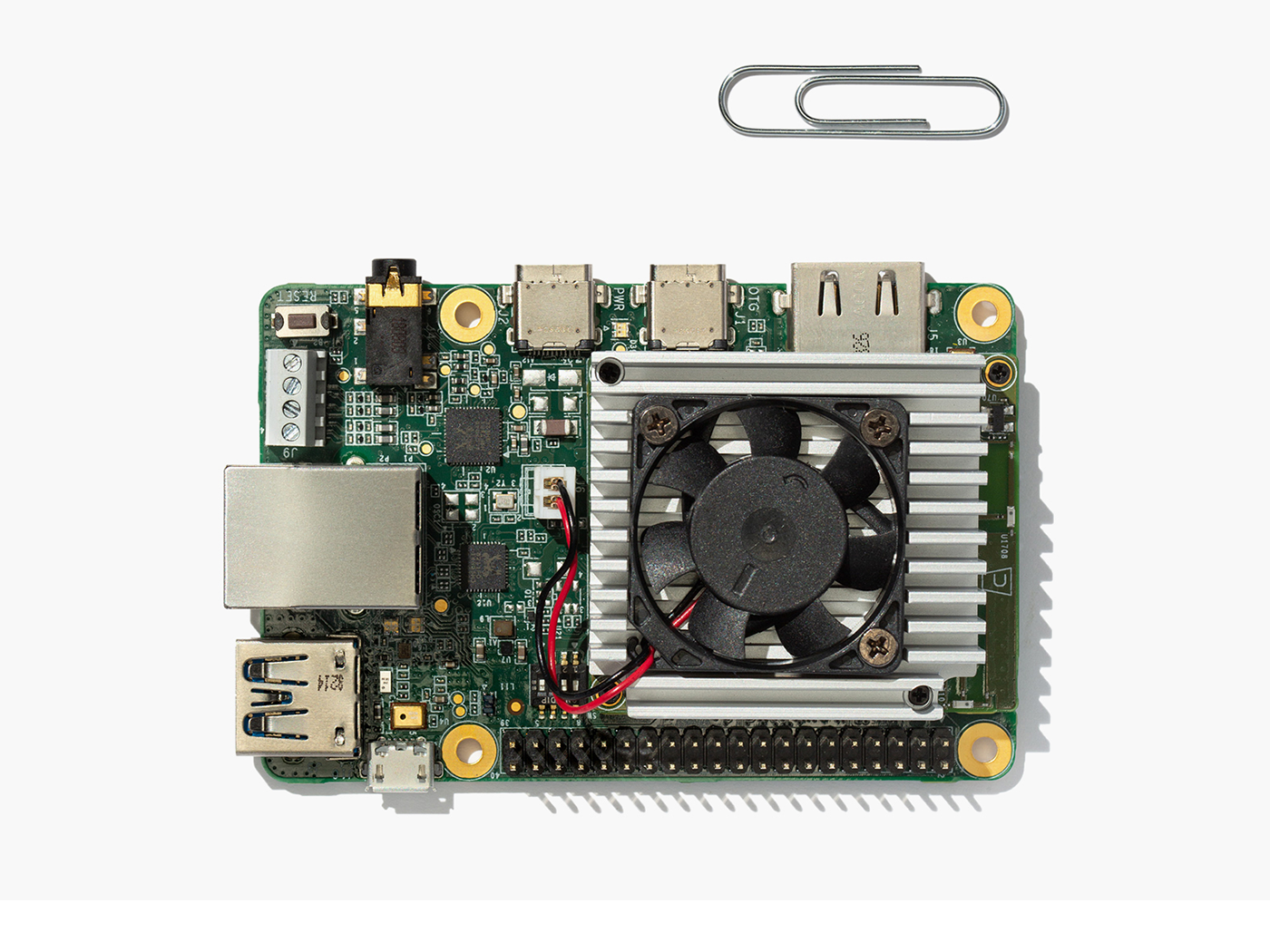
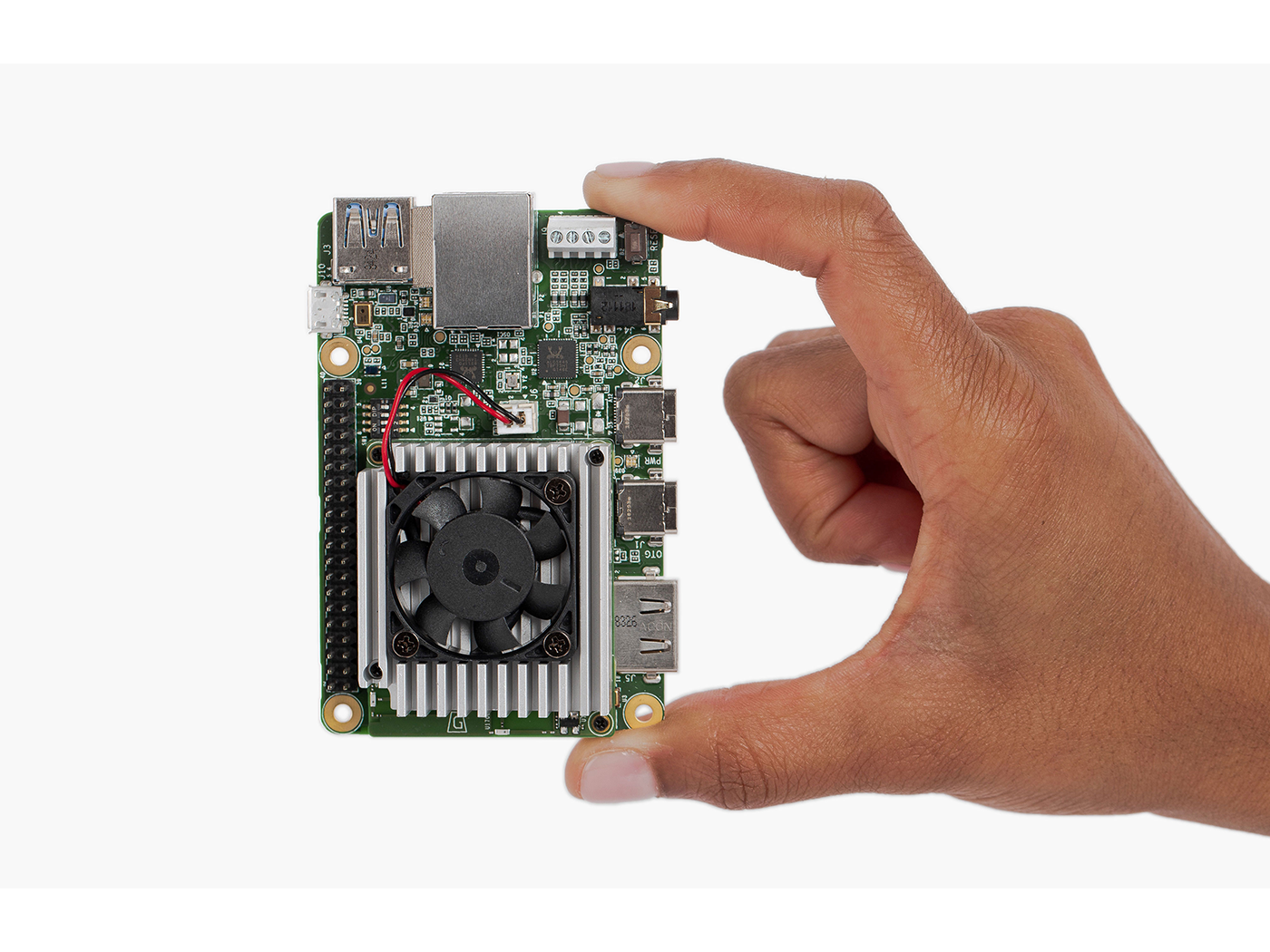
The Coral Dev Board is a single-board computer that’s ideal when you need to perform fast machine learning (ML) inferencing in a small form factor. You can use the Dev Board to prototype your embedded system and then scale to production using the onboard Coral System-on-Module (SoM) combined with your custom PCB hardware.
The SoM provides a fully-integrated system, including NXP’s iMX 8M system-on-chip (SoC), eMMC memory, LPDDR4 RAM, Wi-Fi, and Bluetooth, but its unique power comes from Google’s Edge TPU coprocessor. The Edge TPU is a small ASIC designed by Google that provides high-performance ML inferencing with a low power cost. For example, it can execute state-of-the-art mobile vision models such as MobileNet v2 at almost 400 FPS, in a power-efficient manner.
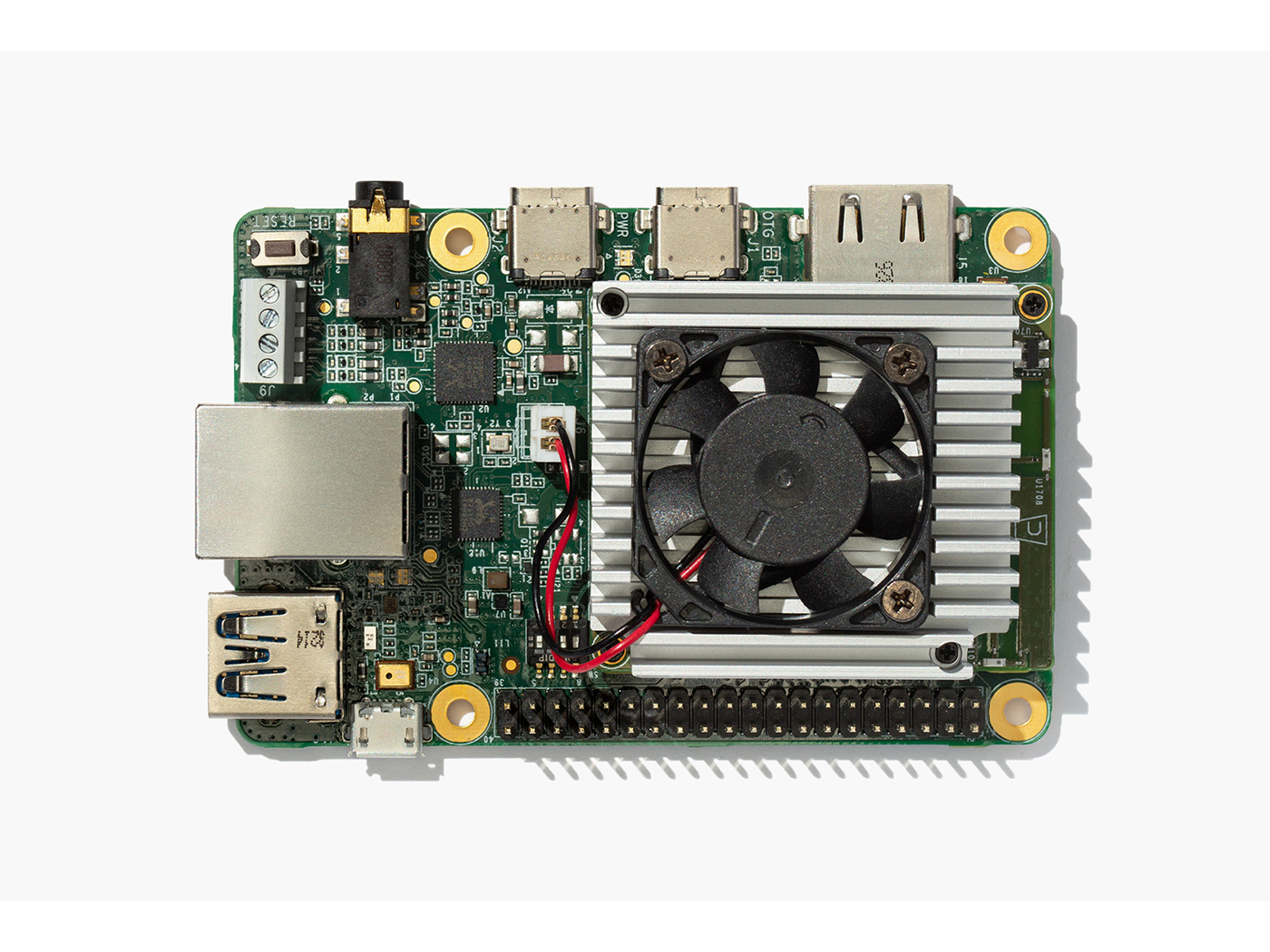
The baseboard provides all the peripheral connections you need to prototype a project, including USB 2.0/3.0 ports, DSI display interface, CSI-2 camera interface, Ethernet port, speaker terminals, and a 40-pin I/O header.
Key benefits of the Dev Board:
- High-speed and low-power ML inferencing (4 TOPS @ 2 W)
- A complete Linux system (running Mendel, a Debian derivative)
- Prototyping and evaluation board for the small Coral SoM (40 x 48 mm)
Specifications
SOM
- NXP i.MX 8M SOC (Quad-core Cortex-A53, plus Cortex-M4F)
- Google Edge TPU ML accelerator coprocessor
- Cryptographic coprocessor
- Wi-Fi 2×2 MIMO (802.11b/g/n/ac 2.4/5GHz)
- Bluetooth 4.1
- 8GB eMMC
- 4GB LPDDR4
USB Connections
- USB Type-C power port (5V DC)
- USB 3.0 Type-C OTG port
- USB 3.0 Type-A host port
- USB 2.0 Micro-B serial console port
Audio connections
- 3.5mm audio jack (CTIA compliant)
- Digital PDM microphone (x2)
- 2.54mm 4-pin terminal for stereo speakers
Video connections
- HDMI 2.0a (full size)
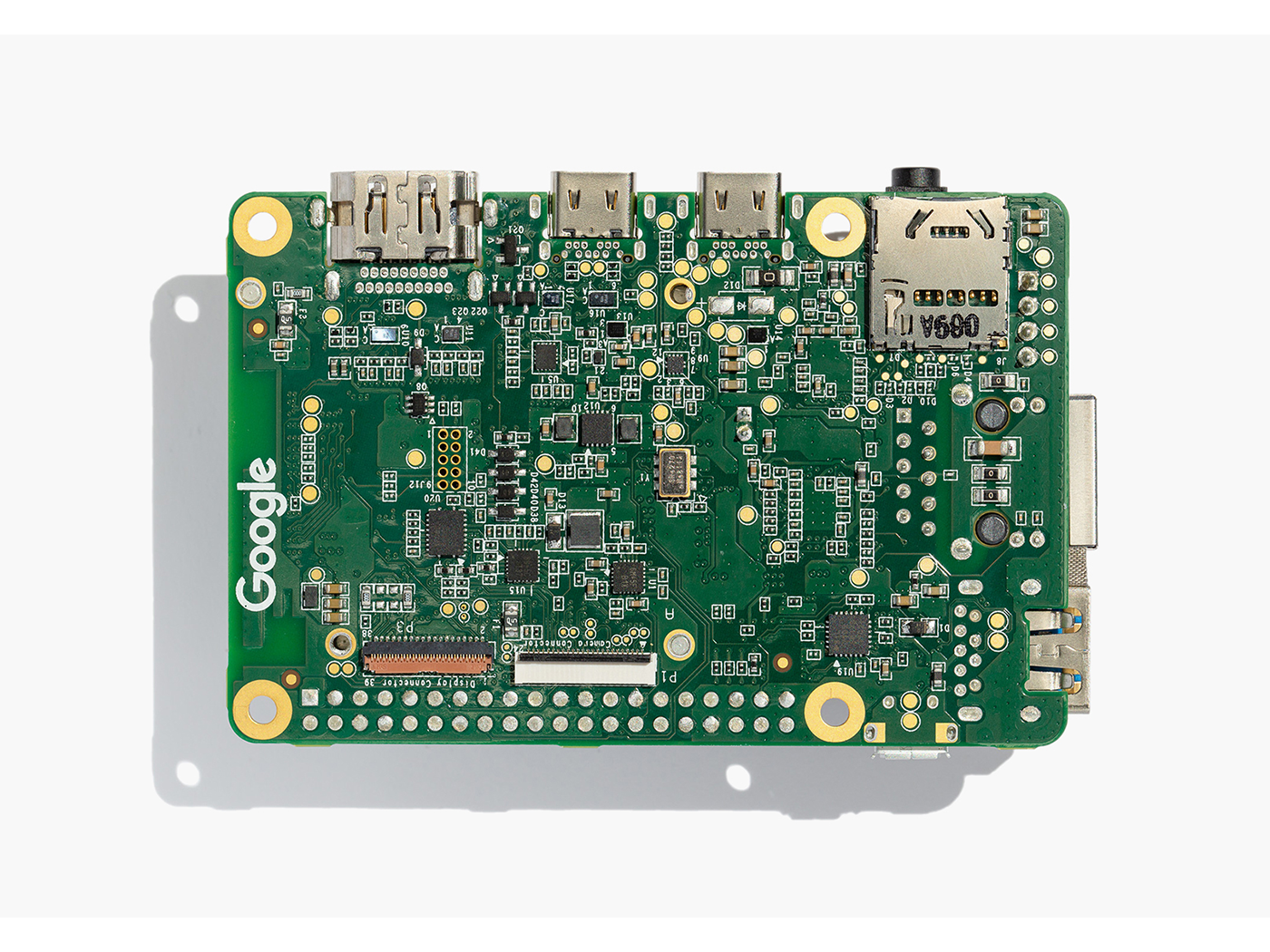
- 39-pin FFC connector for MIPI-DSI display (4-lane)
- 4-pin FFC connector for MIPI-CSI2 camera (4-lane)
MicroSD card slots
Gigabit Ethernet ports
40-pin GPIO expansion headers
Supports Debian Linux
Hardware Overview

Block Diagram

Dimensions

Part List
1 x Coral Dev Board – 4GB RAM Version
Reviews
There are no reviews yet.